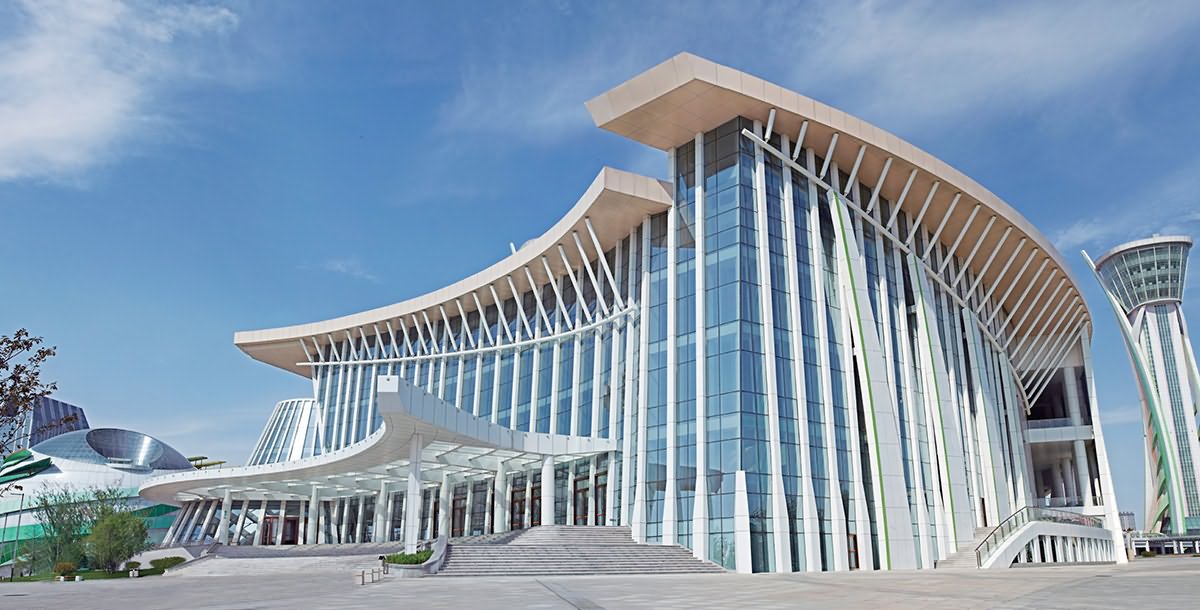
Aluminum Carved Panels for Brand Logo Integration on Building Entrances
A building entrance communicates identity before visitors reach the reception desk. Its proportions, material palette, lighting, and visible signage establish whether a property feels corporate, welcoming, luxurious, technical, or culturally distinctive. Aluminum carved panels provide a practical way to make that first impression memorable while combining architectural decoration with brand recognition.
Unlike a separately mounted sign, a carved aluminum façade panel can make the logo part of the entrance architecture. Patterns, lettering, symbols, and negative-space graphics can be cut into a continuous surface, backlit, layered, or coordinated with adjacent ceiling and wall elements. This approach is suitable for commercial buildings, hotels, government facilities, retail developments, offices, and premium residential lobbies.
A successful result depends on more than transferring a logo into a sheet of metal. The artwork must be adapted for fabrication, the panel system must suit the building envelope, and the illumination strategy should be considered before production. With early coordination, a branded entrance can remain visually refined, durable, and easy to maintain.
Making The Logo Part Of The Architecture
A carved panel is most effective when the brand mark relates to the entrance composition rather than appearing as an isolated graphic. It may occupy a central feature wall, frame a doorway, continue across a canopy soffit, or form a screen between the exterior approach and the lobby. Repeating elements from the logo in surrounding geometric patterns can create a unified visual language without making the façade feel overcrowded.
Scale is especially important. A logo that appears balanced on a computer screen may become difficult to read when translated into a large perforated or carved elevation. Designers should review the mark from the main pedestrian approach, from vehicle drop-off areas, and from the distance where visitors first identify the building. Clear spacing around letters and symbols helps preserve legibility when the panel is viewed in changing daylight.
The panel can carry the logo through several techniques. Direct cut-through openings create a crisp silhouette, while shallow relief, layered aluminum sheets, or contrasting backing panels add depth. A solid metal field with selectively carved details may suit a restrained corporate entrance, whereas a more open pattern can support a hospitality or cultural project with a stronger decorative character.
Choosing A Fabrication Method
Aluminum is well suited to branded entrance features because it offers a favorable balance of low weight, corrosion resistance, formability, and finish flexibility. CNC routing, laser cutting, waterjet cutting, and precision punching can produce different levels of detail. The appropriate process depends on the thickness, alloy, pattern density, edge quality, production volume, and required tolerances.
Fine lettering and intricate symbols require careful attention to minimum bridges and unsupported sections. If a letter contains narrow strokes or enclosed counters, the design may need small connecting tabs or a revised outline to prevent distortion. A fabrication team should receive vector artwork and confirm how the logo will be converted into a production-ready drawing before approval.
Large entrance panels also need a stable support strategy. Subframes, folded returns, stiffeners, concealed brackets, and properly spaced fixing points help control vibration and oil-canning. For exterior applications, the design should allow water drainage and accommodate thermal movement. A modular panel layout can simplify transportation, installation, and future replacement if an individual section becomes damaged.
Finishes, Lighting, And Visual Depth
Surface treatment determines how the logo is perceived in different conditions. Fluorocarbon-coated aluminum offers a broad color range and strong exterior performance, making it useful when the corporate palette must remain consistent over time. Powder coating can provide a durable decorative finish for many interior and sheltered applications. Anodized surfaces create a metallic appearance with visible texture, while brushed or textured finishes can reduce the visibility of minor handling marks.
Color contrast should be tested alongside the background material. A dark carved sheet over a lighter backing produces a clear graphic effect, while a tone-on-tone combination creates a quieter, more integrated appearance. Designers may also use a metallic face with a colored interior cavity or a contrasting rear panel to give the carved areas greater definition.
Lighting transforms the panel after sunset. Concealed LEDs behind the aluminum can produce a halo effect, while a translucent backing can make the cut-out logo glow evenly. Front lighting emphasizes surface texture and relief but may create glare if the light source is poorly positioned. Access to drivers, ventilation around fixtures, and replacement routes should be resolved before the panel is sealed.
For projects using open screens in place of solid branded surfaces, expanded mesh guidance can provide useful context on how aluminum mesh changes transparency, shadow, and spatial separation. Although mesh and carved sheet have different visual properties, both can support layered branding and controlled views.
Comparing Branded Aluminum Panel Options
The best material solution depends on the desired relationship between visibility, pattern, privacy, light transmission, and maintenance. A fully carved sheet gives the clearest graphic control, while perforated panels offer a broader range of repeated motifs and ventilation. Honeycomb panels are valuable when a large, rigid, lightweight surface is required, particularly around deep entrance portals or suspended feature elements.
Expanded mesh creates a more open and industrial character, with changing shadows as people move past it. Aluminum square-tube screens can express a logo through spacing and rhythm rather than through cut graphics. Combining two systems can also be effective: a solid carved logo panel may sit behind a square-tube frame, or a perforated side screen may extend the entrance motif across a larger elevation.
| Aluminum solution | Brand integration method | Visual character | Typical advantages | Important considerations |
|---|---|---|---|---|
| Carved aluminum sheet | Cut-through logo, lettering, or custom pattern | Crisp, graphic, architectural | Excellent logo definition and flexible geometry | Requires careful bridge widths and support design |
| Perforated aluminum panel | Repeated logo motifs or image-like perforation | Refined, patterned, semi-transparent | Good balance of decoration, airflow, and light | Hole size and viewing distance affect image clarity |
| Aluminum honeycomb panel | Carved or applied face over a rigid core | Flat, substantial, premium | High stiffness with relatively low weight | Edge detailing and concealed fixing need coordination |
| Expanded aluminum mesh | Logo suggested through layering, framing, or negative space | Open, textured, dynamic | Strong shadow effects and visual permeability | Less suitable for very small lettering |
| Aluminum square-tube screen | Logo expressed through spacing and alignment | Linear, contemporary, dimensional | Durable screening and strong depth | Requires precise module coordination |
Material selection should follow the entrance’s functional demands rather than appearance alone. A high-traffic doorway may need a surface that resists accidental contact and can be cleaned easily. A coastal or polluted urban environment may require a more carefully specified coating system and maintenance schedule. Interior lobby features can prioritize tactile finish, acoustic integration, or layered illumination.
Coordinating The Entrance Package
Brand panels rarely exist independently. They must align with curtain wall mullions, stone joints, paving lines, door hardware, canopy edges, lighting tracks, security equipment, signage, and mechanical access points. A coordinated elevation drawing can reveal conflicts that are difficult to solve after fabrication, such as a logo crossing a door swing or an illuminated panel blocking a sprinkler head.
The manufacturer should receive the architectural dimensions, logo files, finish references, fixing requirements, and lighting intentions at an early stage. Shop drawings can then show panel divisions, return edges, mounting brackets, service openings, and interfaces with adjacent materials. Full-scale samples or smaller finish mock-ups are particularly valuable for checking color, perforation density, edge appearance, and nighttime brightness.
Installation sequencing also affects the final quality. Subframes may be installed before stone or glazing is complete, while decorative panels may need protection until nearby wet trades have finished. Clearly labeled modules, consistent fixing details, and a documented delivery sequence reduce site delays. Factory preassembly can improve alignment when the entrance contains layered panels, internal lighting, or complex three-dimensional forms.
When project contracts involve overseas suppliers, local approvals, or formal authorization of drawings, teams may also need document services separate from fabrication. For signatures or affidavits connected with a construction package, mobile notary support may be relevant to the administrative side of a project, while the aluminum manufacturer handles design development, production, delivery, and installation coordination.
Recommendations For A Stronger Branded Entrance
A distinctive logo wall should still support the practical experience of arriving at the building. Visitors need clear doors, readable wayfinding, comfortable lighting, and an unobstructed route. The most successful decorative panels combine brand visibility with those everyday requirements instead of allowing the graphic treatment to dominate every surface.
Use the following principles during design development:
- Convert the logo into a fabrication-ready vector drawing and review minimum feature sizes before pricing.
- Test the panel finish, backing color, and illumination together through a physical or high-quality digital mock-up.
- Coordinate panel joints with façade grids, doors, canopy edges, lighting, drainage, and maintenance access.
- Choose carved sheet, perforated aluminum, honeycomb, mesh, or square-tube systems according to transparency and structural needs.
- Specify coating performance, cleaning methods, replacement access, and warranty expectations for the project environment.
A sample should show more than the logo itself. It should demonstrate the intended edge finish, fixing approach, backing surface, lighting diffusion, and relationship with adjacent materials. If the entrance is large, a full-scale fragment can reveal whether the pattern looks too dense, whether the negative space remains legible, and whether the surface appears flat or richly layered from the actual viewing distance.
Building A Consistent Brand Language
The entrance can become the visual starting point for a broader aluminum design package. The same geometry may continue into reception partitions, elevator surrounds, ceiling baffles, balcony screens, signage backgrounds, or interior feature walls. Repetition should be selective: a recognizable line, curve, module, or perforation proportion is often enough to connect spaces without copying the logo everywhere.
Custom decorative solutions are especially useful when a project needs a distinctive identity across different scales. A carved entrance panel can use the complete brand mark, while smaller interior elements use an abstracted fragment or rhythmic pattern. This creates continuity between public areas and helps the building feel deliberately designed rather than assembled from unrelated finishes.
The result should remain durable after the opening ceremony and initial publicity have passed. A carefully engineered aluminum feature can withstand weather, routine cleaning, and changing lighting conditions while preserving the visual clarity of the brand. Its value comes from combining recognition with a credible architectural presence.
Bring The Entrance Concept Into Production
A well-designed aluminum carved panel turns a logo into a permanent part of the building experience. Share the entrance drawings, brand artwork, preferred finishes, dimensions, and lighting objectives with an experienced architectural aluminum manufacturer early in the process. The right partner can help refine the pattern, prepare shop drawings, produce samples, coordinate installation, and deliver a finish that performs as well as it looks.
Guangzhou Huizhi Building Materials Co., Ltd. supports custom façade, interior, and ceiling applications, including carved, perforated, fluorocarbon, honeycomb, expanded mesh, and square-tube aluminum products. Early consultation makes it easier to select a buildable system and carry the brand language from the first entrance concept through final installation.

