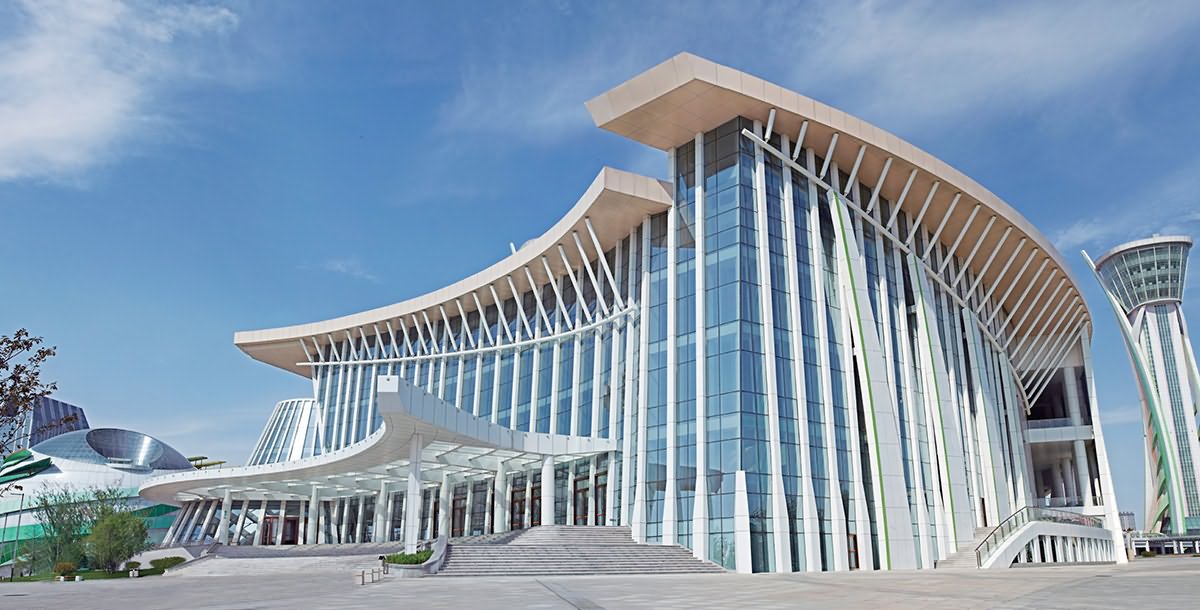
Aluminum honeycomb panels for marine and coastal applications
Marine and coastal architecture demands materials that can withstand salt-laden air, humidity, wind, temperature changes, and intensive daily use. At the same time, ferry terminals, cruise facilities, seaside hotels, yachts, and waterfront commercial buildings require clean visual lines and carefully controlled weight. Aluminum honeycomb panels address these needs through a lightweight composite structure that combines thin aluminum skins with a cellular core.
The result is a panel with a high stiffness-to-weight ratio, making it suitable for large wall, ceiling, soffit, column, and interior lining applications. When the alloy, coating, edge treatment, fasteners, and installation details are selected correctly, honeycomb cladding can support durable and distinctive marine environments.
For coastal projects, material selection should begin with the exposure conditions rather than appearance alone. A sheltered lobby beside the sea has different requirements from an exterior façade facing salt spray, while a vessel interior may require additional fire, smoke, vibration, and weight specifications. A coordinated approach helps the panel system perform as intended throughout its service life.
Why the honeycomb structure suits marine projects
An aluminum honeycomb panel consists of two aluminum face sheets bonded to a hexagonal aluminum core. The core separates the skins and increases the panel’s bending resistance without adding the mass associated with a solid aluminum plate of equivalent stiffness. This makes it easier to cover broad surfaces while reducing loads on the supporting structure.
Low weight is particularly valuable in shipbuilding, floating structures, transport hubs, and renovation work. Panels can be handled more efficiently during installation, and lighter assemblies may reduce the demands placed on secondary framing. In a ferry terminal or coastal airport, large ceiling zones can be created without using unnecessarily heavy construction materials.
The cellular core also helps limit surface deflection when the panel is properly supported. Large-format sheets can provide a calm, continuous appearance with fewer joints than small modular products. The final performance depends on panel thickness, skin gauge, core density, span, support spacing, and the design loads specified by the project engineer.
Managing salt air, moisture, and corrosion
Salt deposits and persistent humidity are among the main concerns for seaside construction. Aluminum naturally forms a protective oxide layer, but that layer does not eliminate the need for a suitable alloy and finish. Chlorides can attack vulnerable areas, especially cut edges, scratches, poorly sealed joints, and locations where water remains trapped.
A marine-grade specification should address the complete assembly rather than the visible face alone. Coating selection, pretreatment, sealants, drainage paths, fasteners, brackets, and contact with other metals all affect durability. Isolating aluminum from incompatible materials can help prevent galvanic corrosion, particularly around steel supports, copper components, and mixed-metal fixing systems.
PVDF or fluorocarbon coatings are frequently considered for exposed architectural surfaces because they offer strong color retention and weather resistance when correctly applied. Anodized finishes may also be appropriate for certain visual and environmental requirements. The right option depends on salinity, ultraviolet exposure, cleaning methods, expected service life, and the manufacturer’s tested system data.
Panels should not be treated as automatically waterproof simply because aluminum is used. Open joints, concealed cavities, and penetrations need planned drainage and ventilation. For areas exposed to direct spray, the design team should define water management details and verify whether the selected panel construction is suitable for that exposure.
Design opportunities across exteriors and interiors
Honeycomb panels can be produced in a broad range of colors, textures, perforation patterns, and shapes. On a waterfront façade, they may form smooth rainscreen surfaces, curved feature bands, projecting fins, soffits, or framed entrance portals. On the interior, the same material can line reception areas, passenger halls, restaurants, corridors, lift lobbies, and ceiling rafts.
Perforated or carved aluminum skins can introduce filtered light and controlled ventilation while maintaining a strong architectural identity. Custom CNC cutting allows signage, wave-inspired motifs, geometric patterns, and branded details to be incorporated into the panel layout. A designer comparing related metal surfaces may also find this expanded mesh article useful when evaluating louvers, screens, and decorative installations alongside honeycomb cladding.
The panel format can be coordinated with lighting, access doors, ventilation grilles, speakers, sprinklers, and inspection points. This coordination is especially important in public marine buildings, where maintenance access and passenger safety must be considered at the same time as visual continuity.
Comparing panel solutions for coastal construction
Different aluminum products can meet different performance and appearance goals. Honeycomb panels are often selected when broad, rigid surfaces and reduced weight are priorities. Solid aluminum sheets may be preferable for highly formed details, impact-prone areas, or smaller components, while expanded mesh can provide transparency and airflow.
The comparison below offers a starting point. Final selection should be based on structural calculations, fire requirements, corrosion exposure, fabrication limits, and the project’s cleaning and maintenance plan.
| Panel solution | Main advantages | Typical marine or coastal uses | Key specification concerns |
|---|---|---|---|
| Aluminum honeycomb panel | High stiffness, low weight, large-format appearance | Façades, ceilings, wall linings, ship interiors, terminal halls | Core bonding, edge sealing, support spacing, fire performance |
| Solid aluminum panel | Strong, formable, and suitable for detailed fabrication | Feature cladding, columns, trims, impact-prone zones | Greater weight, thermal movement, oil-canning control |
| Perforated aluminum panel | Airflow, solar filtering, visual texture | Screens, ventilation covers, balcony fronts, soffits | Hole pattern, acoustic behavior, edge rigidity |
| Expanded aluminum mesh | Transparency, shading, and lightweight screening | Louvers, guard screens, façades, decorative layers | Opening size, corrosion at cut edges, fixing stability |
| Aluminum square-tube panel | Linear rhythm and three-dimensional depth | Ceilings, canopies, feature walls, sunshades | Joint alignment, dust accumulation, access for cleaning |
For a mixed-use waterfront development, several formats may be combined. Honeycomb sheets can cover the main façade, perforated panels can screen mechanical zones, and square-tube elements can add depth to entrances or public terraces. Coordinating colors and module dimensions across these products creates a unified design without forcing every area into one construction method.
Installation details that protect long-term performance
A successful marine cladding system begins with accurate site measurement and a coordinated shop drawing package. Drawings should identify panel numbers, joint widths, fixing points, subframe locations, access panels, corners, penetrations, and drainage routes. Large panels require careful handling to avoid twisting, denting, or damage to finished surfaces before they reach the façade.
Movement joints deserve particular attention. Aluminum expands and contracts with temperature, and dark finishes may experience greater surface temperature changes under strong sunlight. Fixed and sliding connections, joint sealants, and support brackets should be designed to accommodate movement without transferring excessive stress to the panel skins or bonded core.
Edges are vulnerable because cutting exposes the internal construction. Depending on the system, edges may require folded returns, aluminum profiles, sealant, caps, or specially bonded closures. Any exposed opening should be protected from direct water entry and designed so that moisture cannot remain trapped inside the panel assembly.
On vessels and transport facilities, vibration and repeated movement may influence fastener selection and joint design. Interiors may also require impact resistance, cleanability, low smoke performance, or strict weight limits. These requirements should be communicated before fabrication rather than addressed after panels have been produced.
Matching finish, core, and compliance requirements
A reliable specification identifies the face alloy, back skin, core type, total thickness, coating system, color standard, gloss level, surface texture, and allowable tolerances. It should also define whether the panel will be used indoors, outdoors, near splash zones, or in a location exposed to industrial pollutants in addition to marine air.
Fire performance is a major consideration in passenger terminals, hotels, public venues, and ships. The aluminum skin does not determine the behavior of the complete panel by itself. The core, adhesive, coating, joints, and supporting system all contribute to the tested result. Project teams should request documentation relevant to the applicable local building or marine code.
Acoustic and thermal objectives may influence the backing assembly. A honeycomb panel can be paired with insulation, an acoustic fleece, or a ventilated cavity, but these additions must be evaluated as part of the complete wall or ceiling system. In humid environments, the assembly should avoid creating concealed areas where condensation can accumulate.
Guangzhou Huizhi Building Materials Co., Ltd. can support projects requiring custom aluminum architectural products, including honeycomb, fluorocarbon-coated, perforated, carved, expanded mesh, and square-tube solutions. Consultation, production, installation coordination, delivery, and after-sales support are valuable when a project involves multiple panel types or unusual coastal detailing.
Specification priorities for coastal projects
A clear procurement brief helps designers, contractors, and manufacturers resolve technical issues before fabrication. It should include exposure conditions, dimensions, finish samples, performance targets, and coordination requirements for every panel zone.
- Define whether each panel area is sheltered, fully exposed, or subject to direct salt spray and wash-down.
- Specify the aluminum alloy, core construction, panel thickness, coating system, and edge protection method.
- Require compatibility checks for fasteners, brackets, sealants, insulation, and adjacent metals.
- Confirm fire, smoke, acoustic, structural, and vibration requirements for the complete assembly.
- Approve shop drawings and physical finish samples before mass production begins.
Quality control should continue through packing, transport, storage, and installation. Panels need dry, protected storage away from standing water and construction debris. Protective films should be removed according to the manufacturer’s instructions so adhesive residue does not bake onto the finish under coastal sunlight.
A dated record of approvals, test reports, delivery batches, and site observations can simplify handover and future maintenance. Project teams that track these items through a central news archive or document register are better positioned to identify finish batches, resolve installation questions, and plan replacement panels if damage occurs.
Marine and coastal architecture benefits from materials that balance appearance, weight, stiffness, and environmental resistance. Aluminum honeycomb panels provide that balance when their complete system is designed around salt exposure, water movement, thermal expansion, fire safety, and maintenance access. Contact Guangzhou Huizhi Building Materials Co., Ltd. with project drawings, dimensions, finish preferences, and site conditions to develop a tailored panel solution from design consultation through production and installation.

